Nvidia has a new generation supercomputer with 336 million transistors
Chipmaker Nvidia has announced a slew of groundbreaking innovations in artificial intelligence, self-driving vehicles, and graphics technology on stage at the world’s largest technology show, CES 2026. The company’s CEO, Jensen Huang, himself detailed these new technologies in his keynote speech.
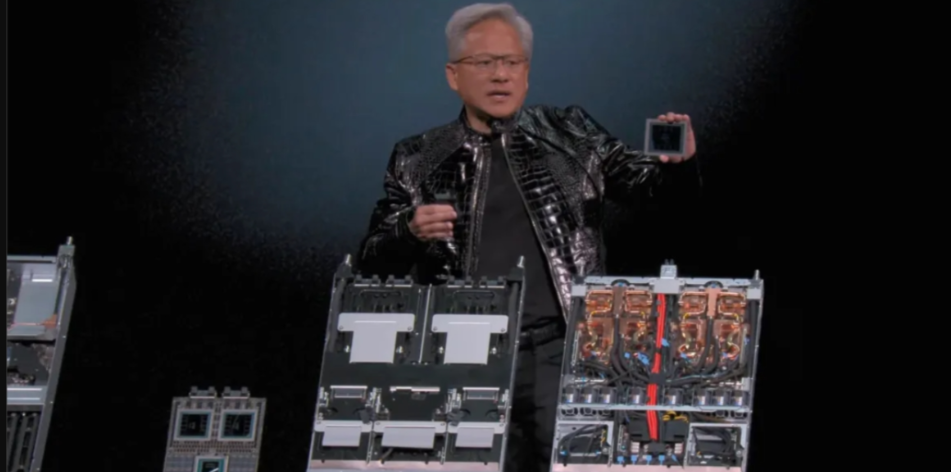
Nvidia has officially put its next-generation supercomputer, called Vera Rubin, into production. The powerful supercomputer is based on Nvidia’s latest GPU architecture.
Each Vera CPU has 88 custom-built Olympus cores and 1.5 terabytes of system memory. It has a total of 227 billion transistors. On the other hand, the Rubin GPU uses 336 billion transistors. A Vera Rubin supercomputer combines two CPUs and two GPUs.
Nvidia also made a big announcement in autonomous vehicle technology. The company has unveiled a new series of open-source AI models called AlpaMyo. Its main version, AlpaMyo-1, is a 10 billion-parameter chain-of-thought-based artificial intelligence that can analyze human-like logic and make decisions in complex driving situations.
This AI model is able to break down a sudden dangerous situation into multiple smaller problems and determine safe solutions and provide a logical explanation for each decision. In addition, another model called ‘AlpaSim’ has been launched, which will be used in closed-loop training to practice driving situations that are rarely seen in reality.
Jensen Huang said that the 2025 Mercedes-Benz CLA will be the first car to use Nvidia’s fully autonomous vehicle technology. “Our ultimate goal is to one day make every car and truck fully autonomous,” he said.
Nvidia has also brought new additions to gaming and display technology. The company unveiled DLSS 4.5 and G-Sync Pulsar technology. The use of the second-generation Transformer model in DLSS 4.5 will make graphics smoother and more stable. It adds 6X multi-frame generation and dynamic frame generation, which are scheduled to be launched this spring.
On the other hand, Nvidia claims that G-Sync Pulsar technology will provide motion clarity equivalent to about 1,000 Hz through pulsing the display’s backlight. These displays will be able to automatically adjust brightness and color temperature according to the surrounding environment. Pre-orders for the first phase of G-Sync Pulsar displays began on January 7.
Related Posts


About The Author
